EY Event Production
(SERVICES)
Experiential
Campaign Design
Motion Design
(YEAR)
2023 - 2026
The facility before the facility
Strategic Growth Forum was not only an event people attended. It was an experience EY had to earn before guests ever arrived.
The work began with courtship. Executives, founders, partners, and high-value attendees needed to feel invited into something worth their time. That meant the event story had to start early, through tailored communications, digital touchpoints, landing pages, invitations, gifting moments, and campaign graphics that made SGF feel considered before it became physical.
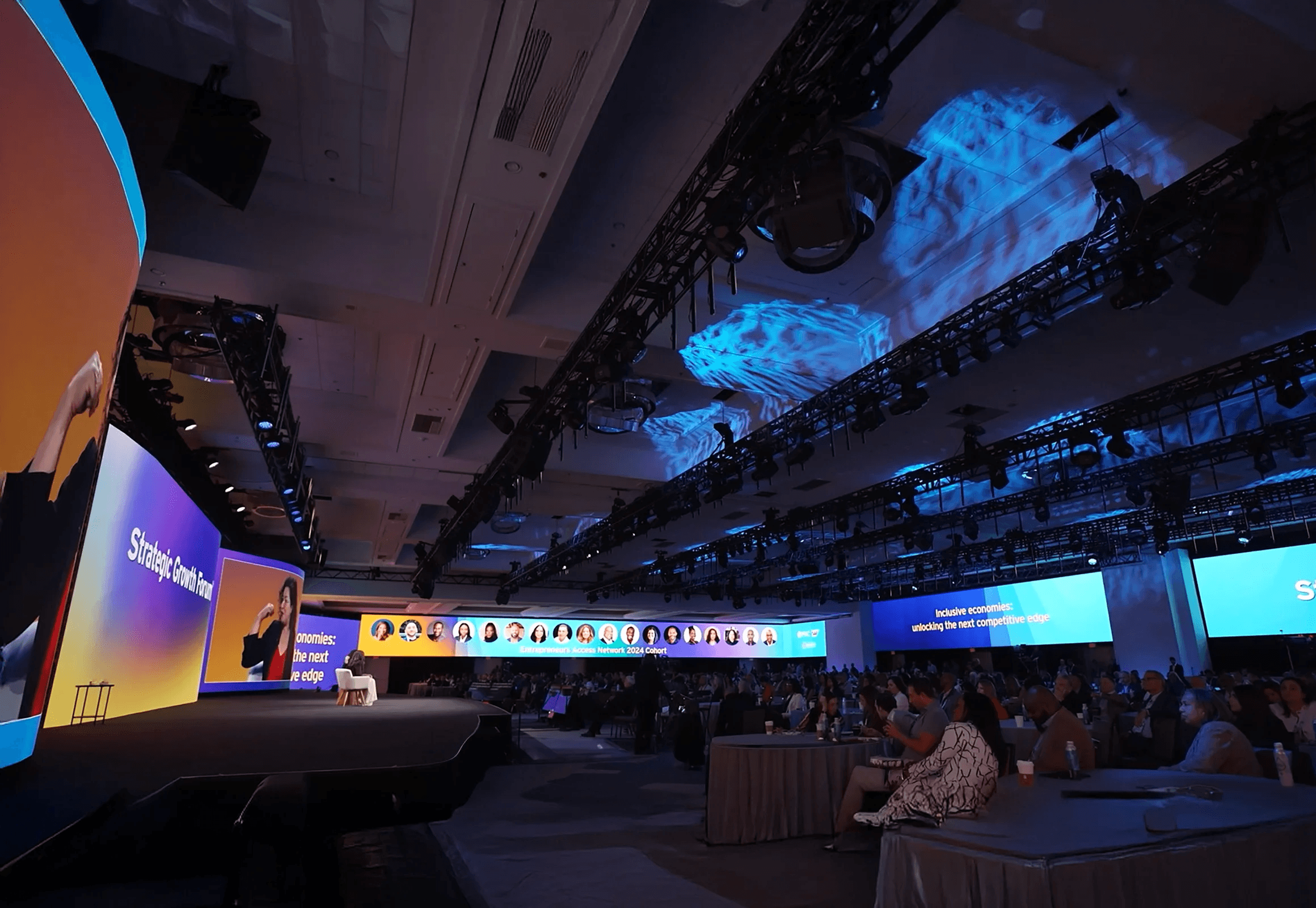
Once guests arrived, the experience had to expand. Airport graphics, transportation touchpoints, hotel signage, environmental media, digital displays, immersive installations, and mainstage visuals all had to feel like parts of the same world. The goal was not simply to brand a conference. It was to make the event feel produced, cinematic, and intentional from the first signal to the final cue.
My role sat inside that larger machine. I did not own the entire SGF program end to end. I led specific creative workstreams within a large event and production team, bringing a broadcast background into the parts of the experience where timing, motion, signage, staging, and live graphics had to work together.
The Tension
SGF had to do two difficult things at once.
First, it had to convince people to come. The invitation campaign needed to create anticipation and make the event feel valuable before anyone booked a flight. This required more than a save-the-date. It required a sequence of touchpoints that could make the experience feel personal, premium, and worth prioritizing.
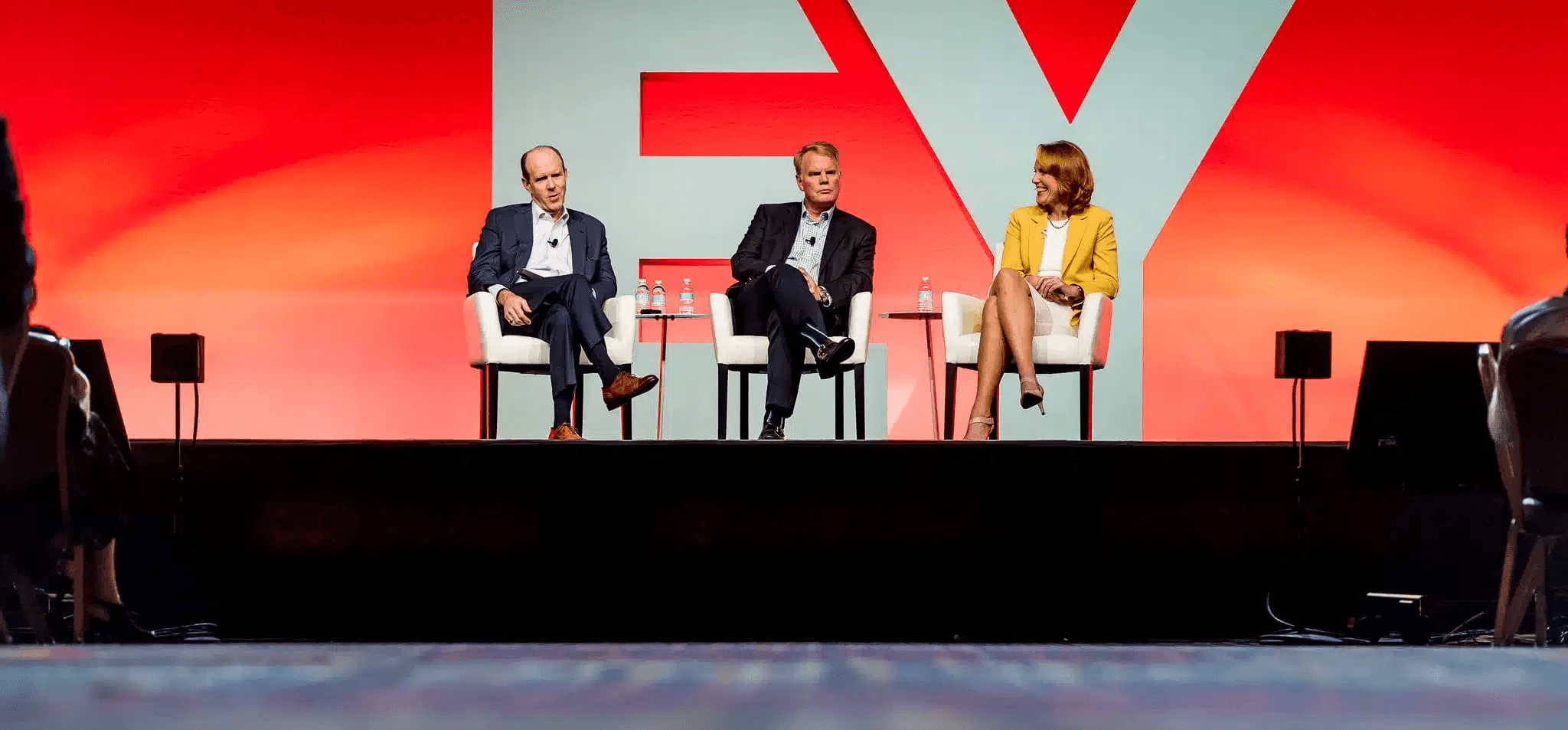
Second, once guests arrived, the event had to deliver on that promise. The scale had grown. The expectations were higher. EY was bringing together executives, founders, speakers, entertainers, emerging technology, awards programming, immersive environments, and Hollywood-level talent. Every part of the visual system had to support a larger sense of production.
The challenge was not only design quality. It was continuity. The same story had to hold across inbox, airport, hotel, exhibit hall, stage, screen, and backstage control.
The Idea
The creative response was to treat SGF as a complete attendee journey, not a collection of event graphics.
My broadcast background became a practical advantage. Broadcast trains you to think in systems: what the audience sees, what the producer needs, what the screen can hold, what changes under pressure, and how motion, timing, hierarchy, and clarity shape a live moment.
That translated directly into SGF. I could support the front-of-house experience, develop campaign and environmental graphics, help shape motion and signage systems, and then move backstage to support the live show itself.
The work asked for a designer who could think like a campaign builder, move like a producer, and stay calm when the room was already live.
The System
The SGF system worked in layers.
The first layer was the invitation and courtship campaign. This was where the event began as a promise. The work needed to create early desire, set tone, and make SGF feel like a meaningful executive experience before it became a physical one. Email, landing page, invitation, gifting, and campaign touchpoints were part of that early rhythm.
The second layer was arrival. Guests were moving through a curated path, from airport to transportation to hotel to event space. That path became an opportunity to build recognition and momentum. Airport graphics, route-based messaging, hotel signage, digital displays, and environmental media helped turn travel into the beginning of the event rather than the step before it.
The third layer was the event environment itself. SGF needed to feel larger, more immersive, and more produced. I supported and led workstreams that extended the visual system into signage, display graphics, wayfinding, mainstage assets, motion, and environmental storytelling so the experience felt connected across the property.
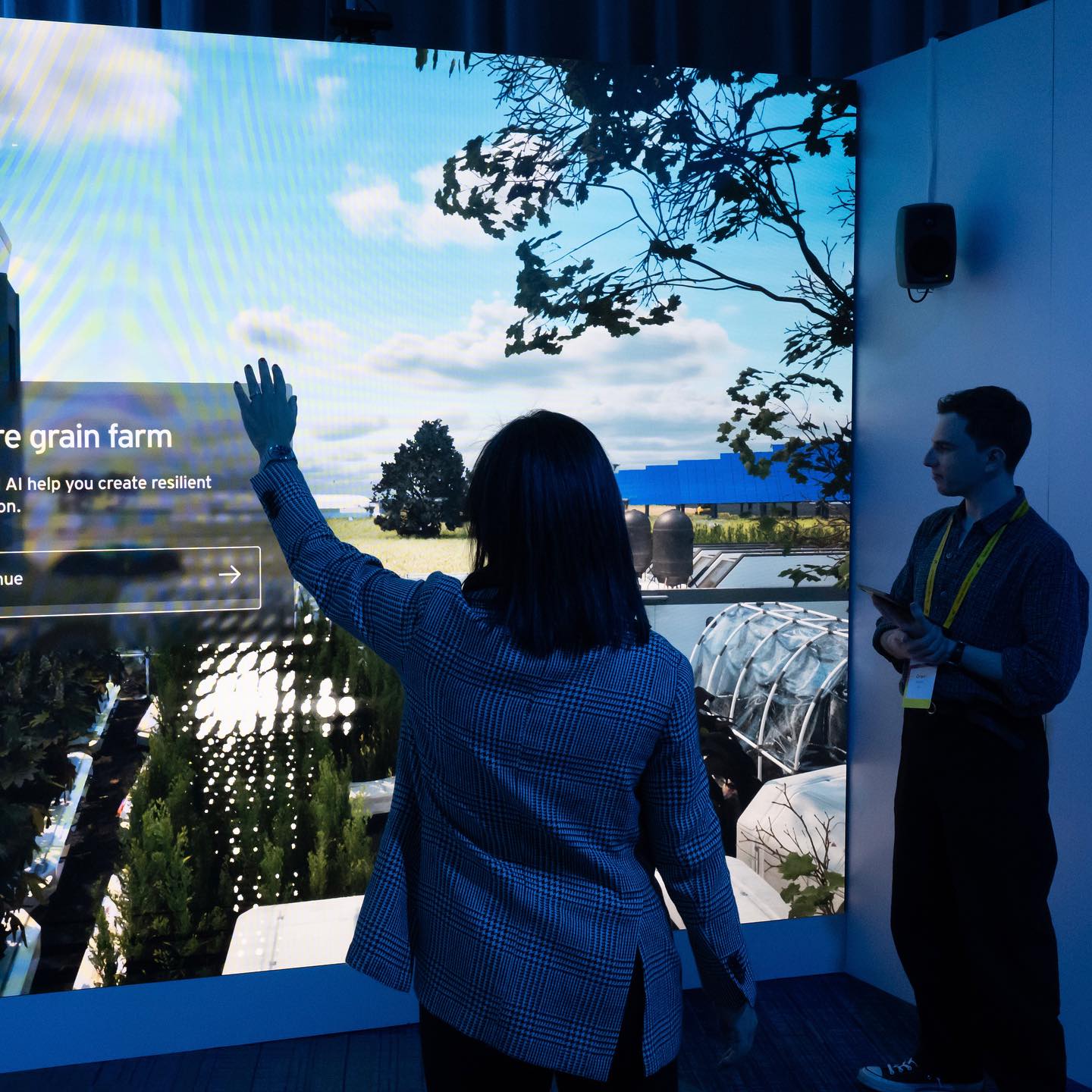
The fourth layer was Illumination, the emerging technology experience inside SGF. This was a separate environment dedicated to AI, robotics, AR, VR, biomedical innovation, and future-facing business applications. I directly led the creative workstream for this space, coordinating a team across digital signage, motion graphics, display graphics, interactive content, writing, video, web, and vendor support. Each technology pod needed to translate complex innovation into something attendees could understand quickly, move through physically, and remember after leaving.
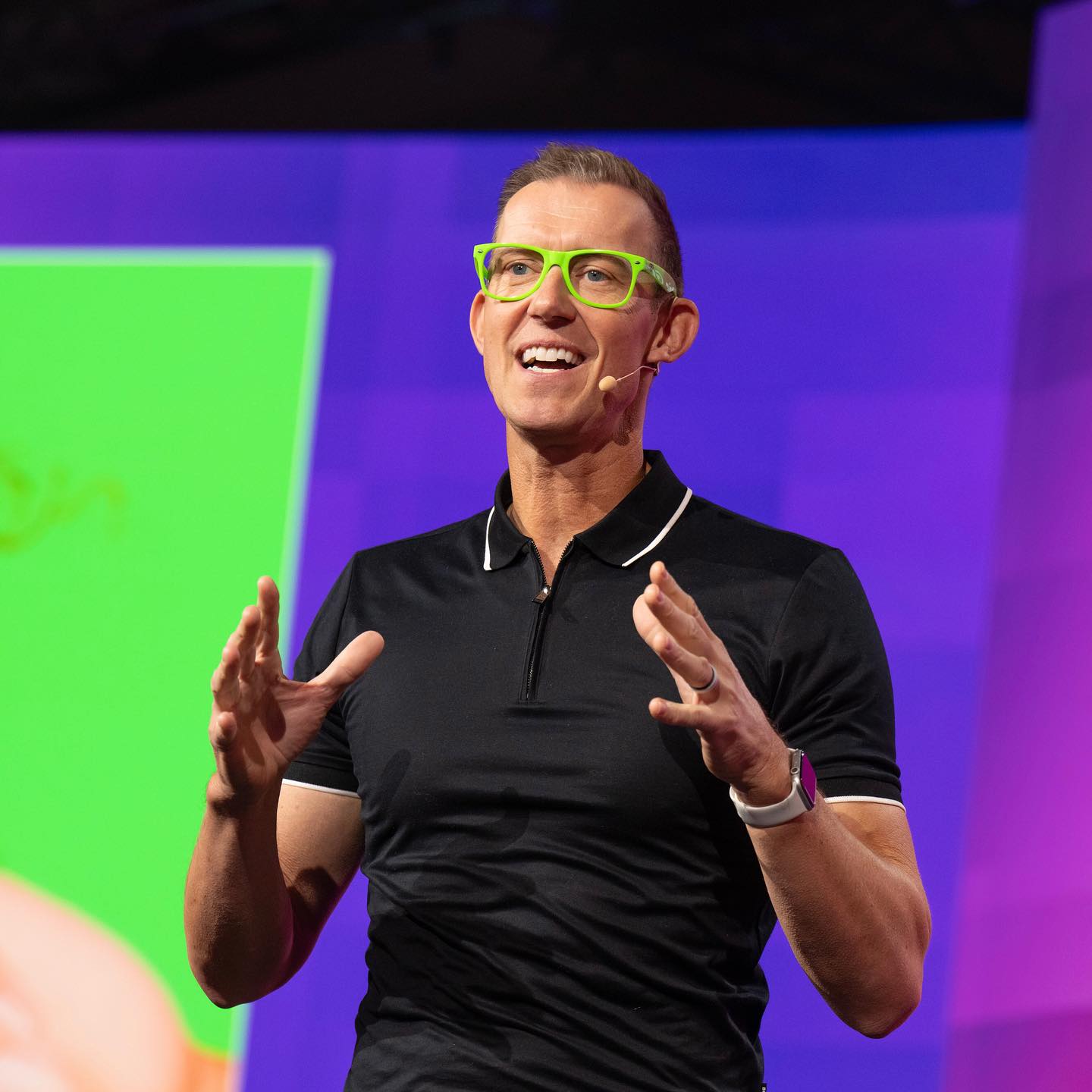
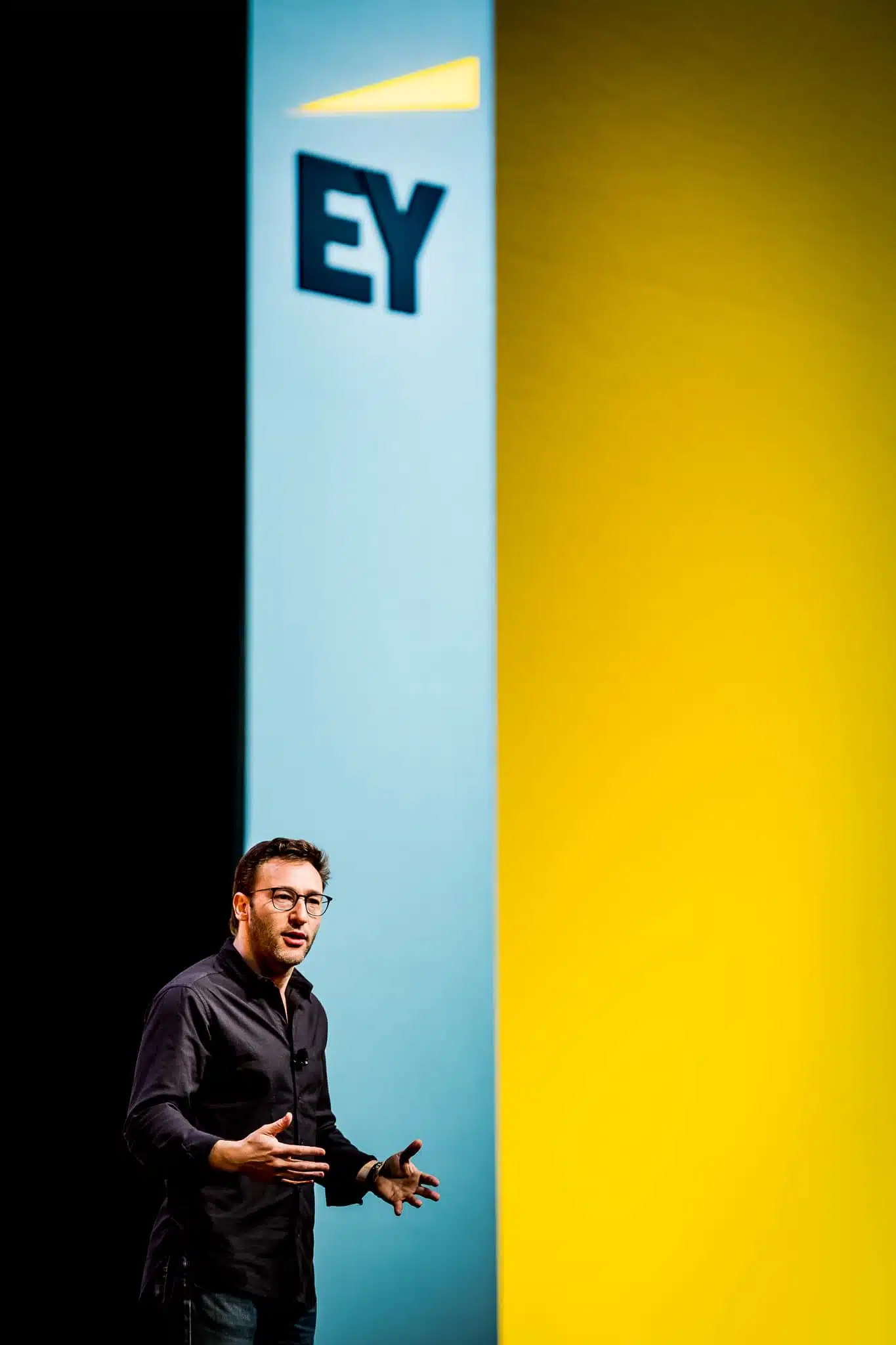
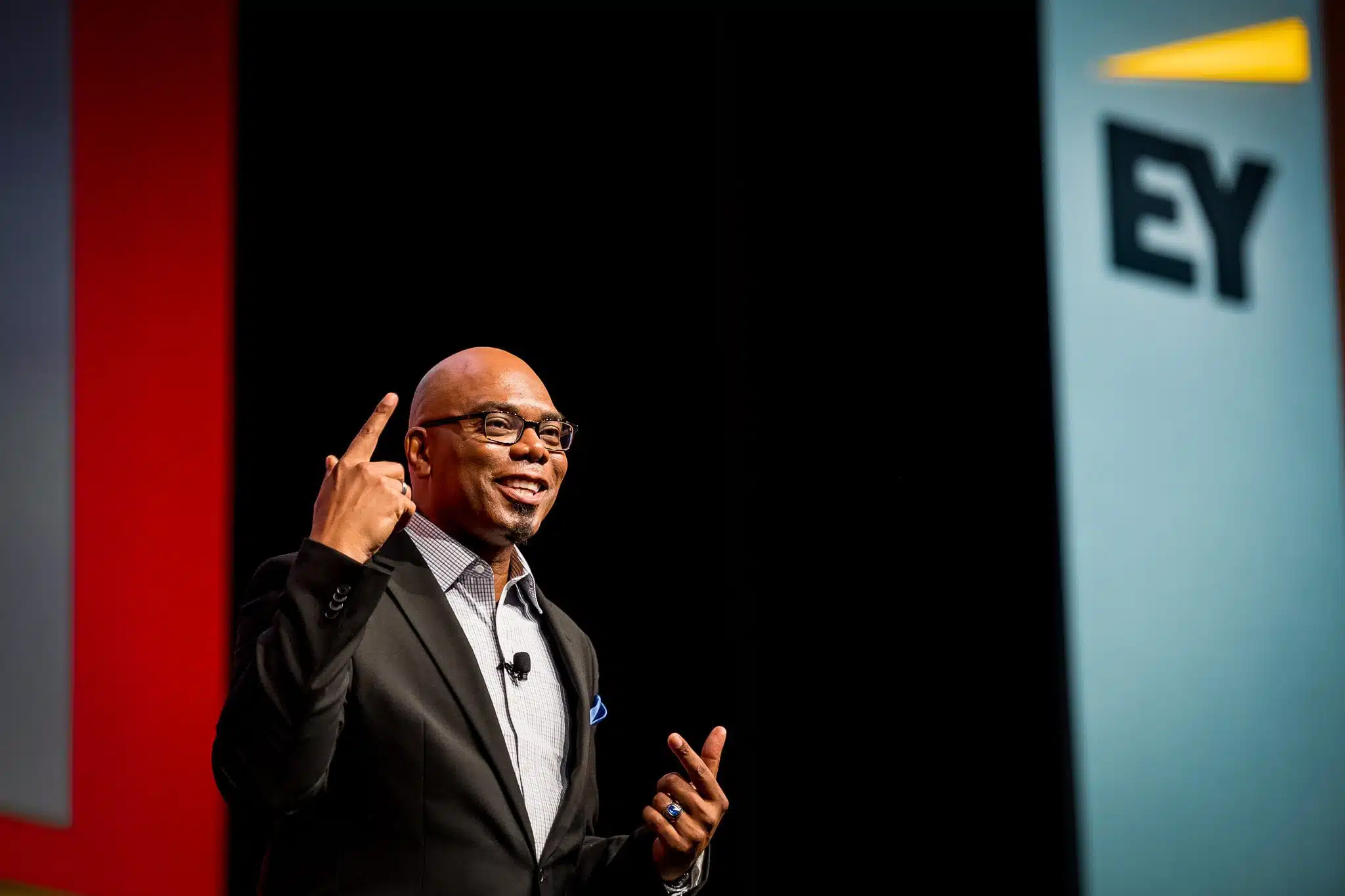
The fifth layer was the live show. SGF included executive presentations, awards programming, major speakers, hosted segments, and entertainment. Onsite, I worked backstage as a graphics producer, testing assets, checking transitions, validating LED-screen output, coordinating with vendors, and making changes when content shifted close to showtime. This was where the broadcast experience mattered most. The work had to function in the room, not only in the design file.
Together, these layers helped SGF feel less like a conference and more like a produced experience: invited before arrival, guided through space, immersed in innovation, supported onstage, and held together under live pressure.
The Outcome
The work helped elevate SGF into a more connected, cinematic, and production-ready event experience.
The pre-event campaign work helped create anticipation before guests arrived. The arrival and environmental systems made the event feel present from the moment attendees entered the journey. The Illumination experience helped translate emerging technology into a physical, navigable story. The mainstage and backstage graphics support helped the live program move with more polish, speed, and confidence.
SGF contributed to a 26% attendance increase during this period. The number matters, but the deeper shift was experiential. The event became more intentional from end to end: more personal before arrival, more immersive onsite, more produced onstage, and more resilient behind the scenes.
The value of the work was not only in the graphics people saw. It was in the continuity between the invitation, the environment, the stage, and the live moment.