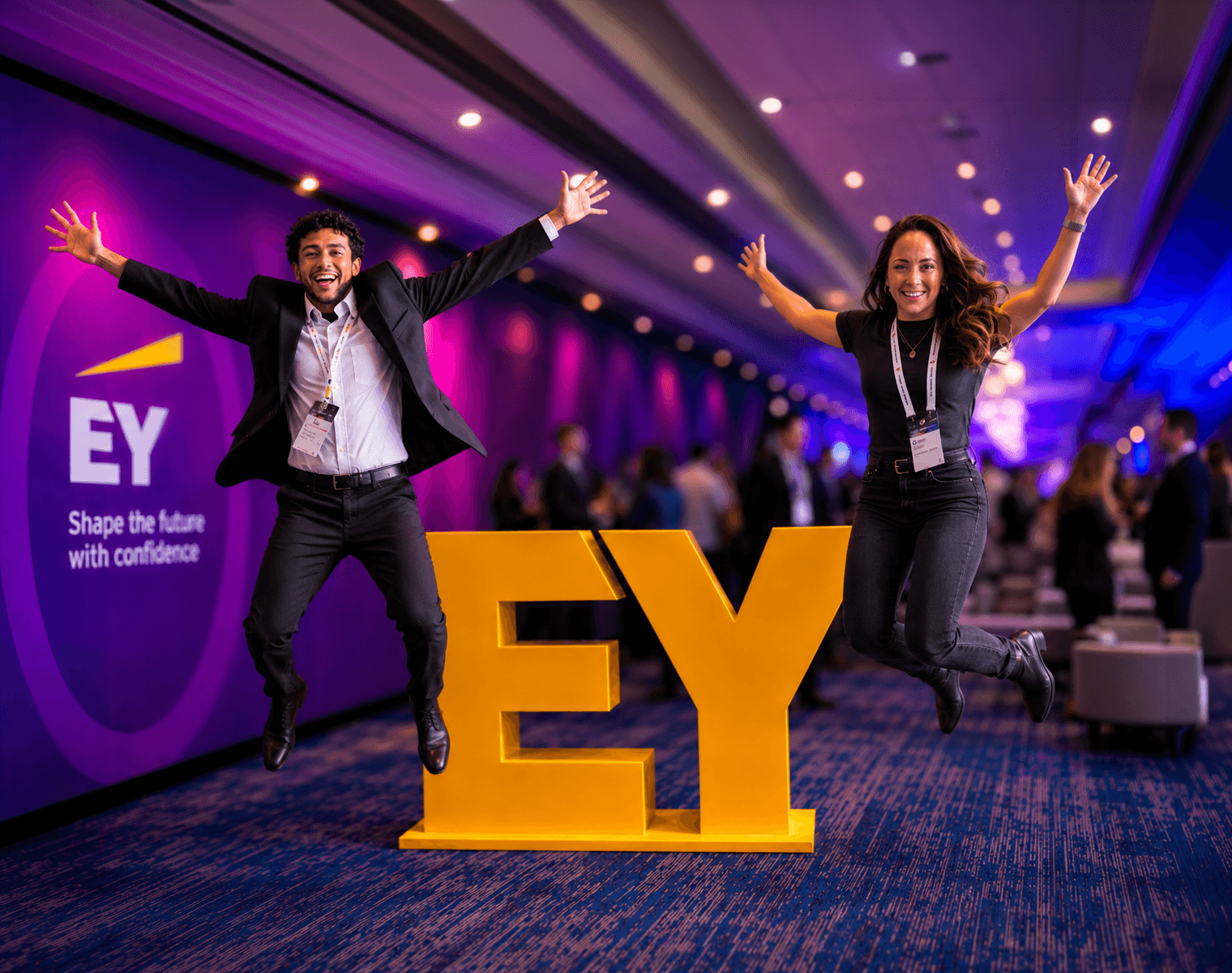
The Keystone Pursuit: Winning Exxon
(SERVICES)
Creative Strategy
Art Direction
Campaign Design
(YEAR)
2024
The facility before the facility
In a high-stakes enterprise pursuit, the first impression rarely begins in the meeting room. It begins in the signals that arrive before the conversation: the tone of the first message, the care of the materials, the confidence of the sequence, and whether the work feels built for the people receiving it.
EY’s opportunity with ExxonMobil required more than credibility. The expertise was already there. What the pursuit needed was distinction, speed, and a sense of personal attention strong enough to shift perception against an incumbent Big Four relationship.
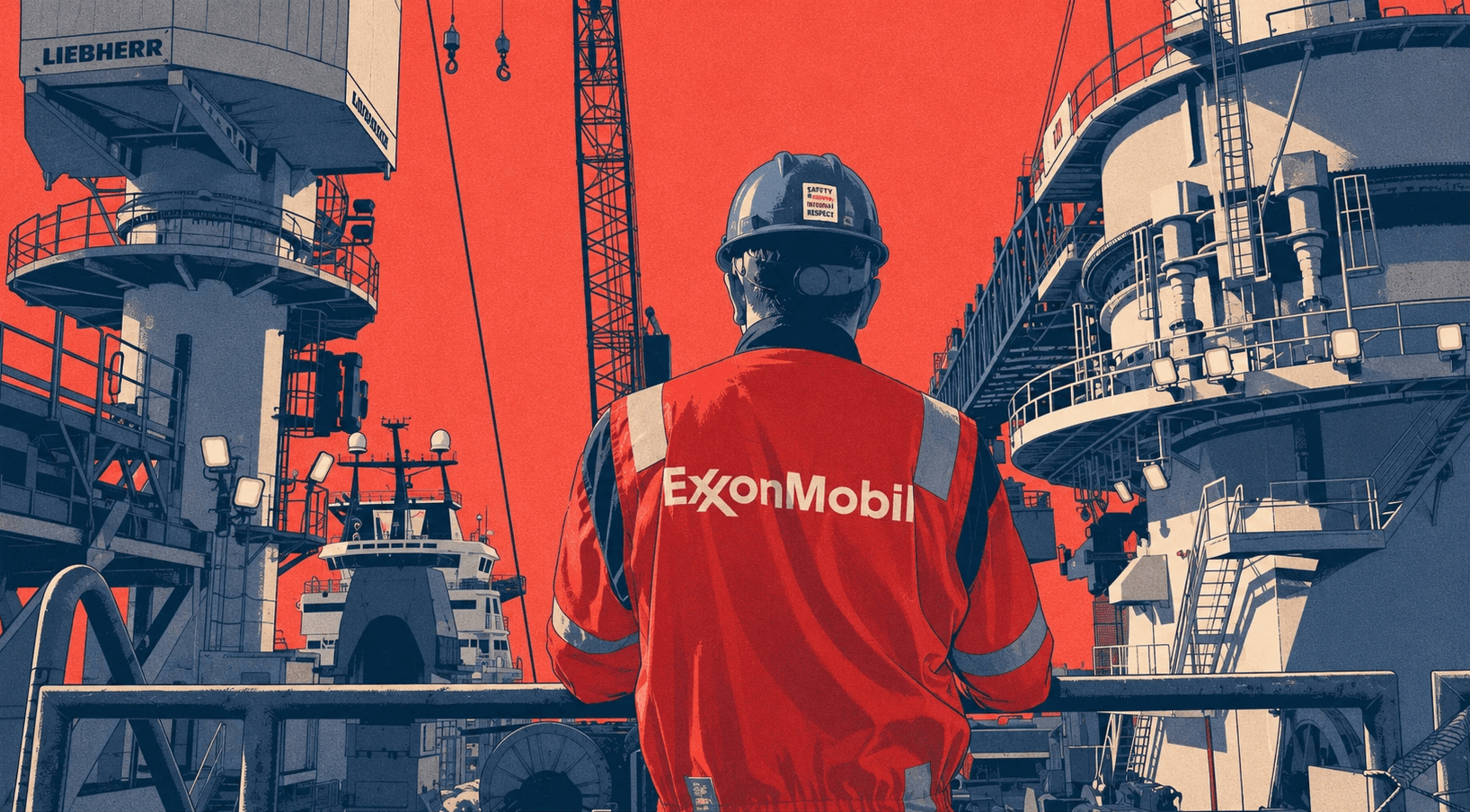
The campaign was built around the idea of the keystone: the piece that brings separate forces into alignment and allows a larger structure to hold. For ExxonMobil, that metaphor gave EY a clear role in the story. Energy, infrastructure, technology, capital, policy, and execution were not separate conversations. They were parts of one system that needed to come together.
The Tension
The pursuit window had narrowed quickly. A competing firm was moving aggressively, and EY needed to create momentum before the opportunity closed around an existing relationship.
The work had to feel premium without feeling ornamental. It had to feel personal without feeling overproduced. It had to support an executive conversation while also building confidence before anyone entered the room.
The central challenge was not only what to make. It was how to make the pursuit unfold with enough intention that every touchpoint felt connected.
The Idea
The creative response was to treat the pursuit as a sequenced experience rather than a single pitch moment.
The keystone became the organizing principle. It gave the campaign a visual metaphor, a strategic center, and a way to frame EY as the partner capable of bringing complexity into alignment. The idea was simple enough to travel, but broad enough to hold the full pursuit: the business case, the relationship, the executive presentation, the environmental story, and the follow-up.
My role was to turn that idea into a working system under pressure. I shaped the creative direction, developed the visual approach, built the timeline, organized the workstreams, led stakeholder reviews, directed contributors, and made final design decisions across the pursuit experience.

The System
The experience moved in stages, each one building more confidence than the last.
The first stage established the relationship. Before the larger campaign could unfold, EY needed an immediate touchpoint that felt considered, direct, and specific to ExxonMobil. This early expression set the tone for the pursuit and gave the team a clear narrative foundation to build from.
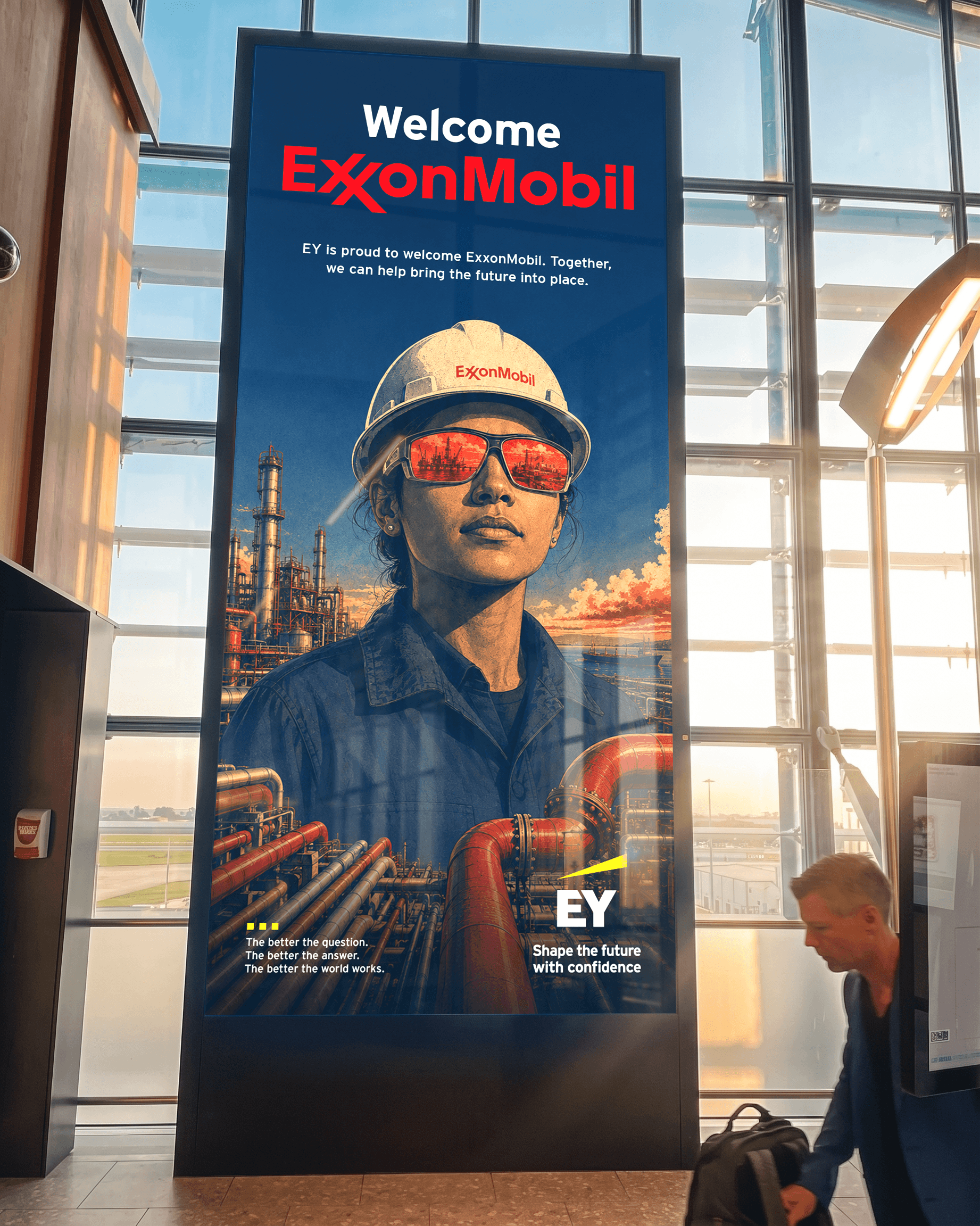
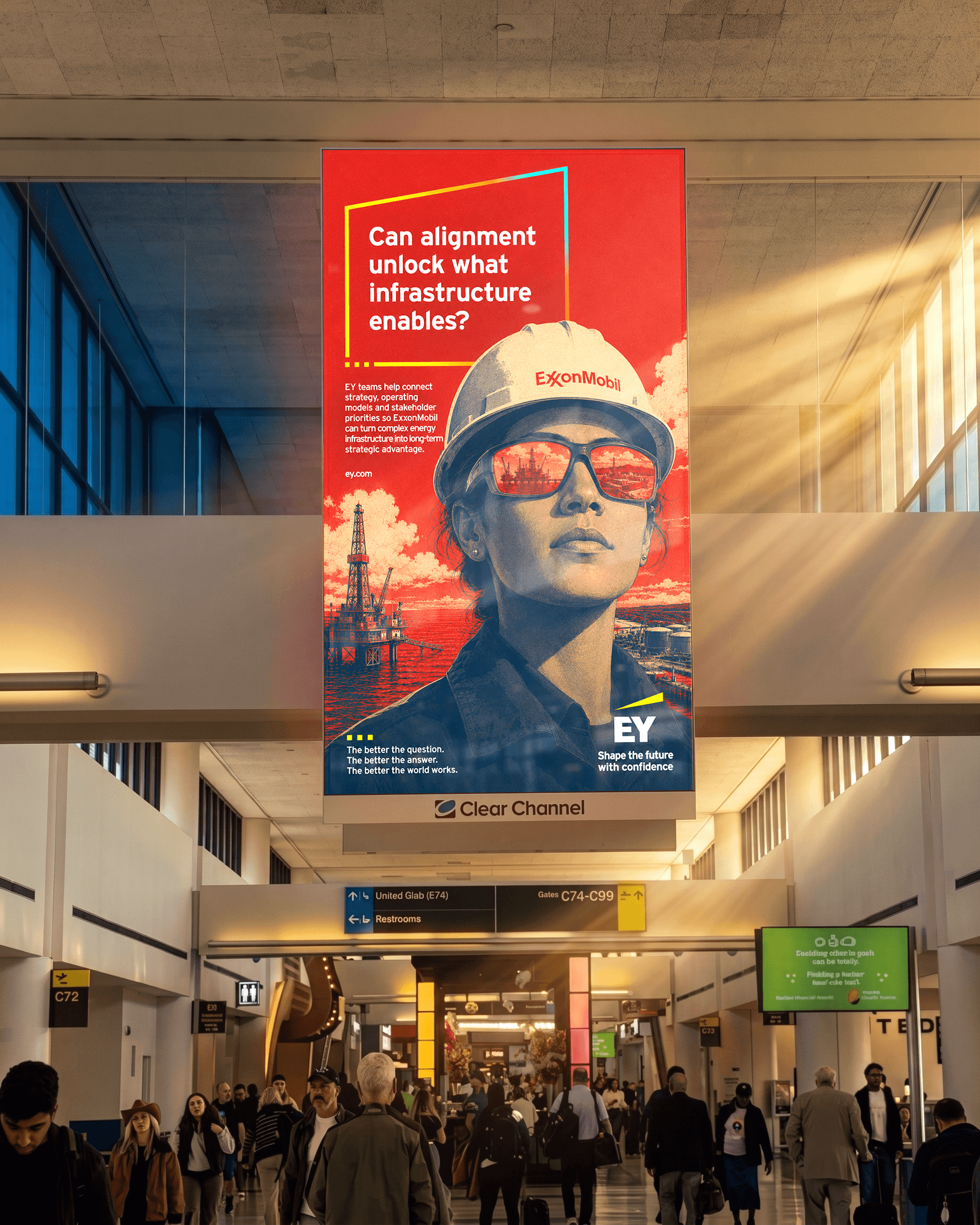
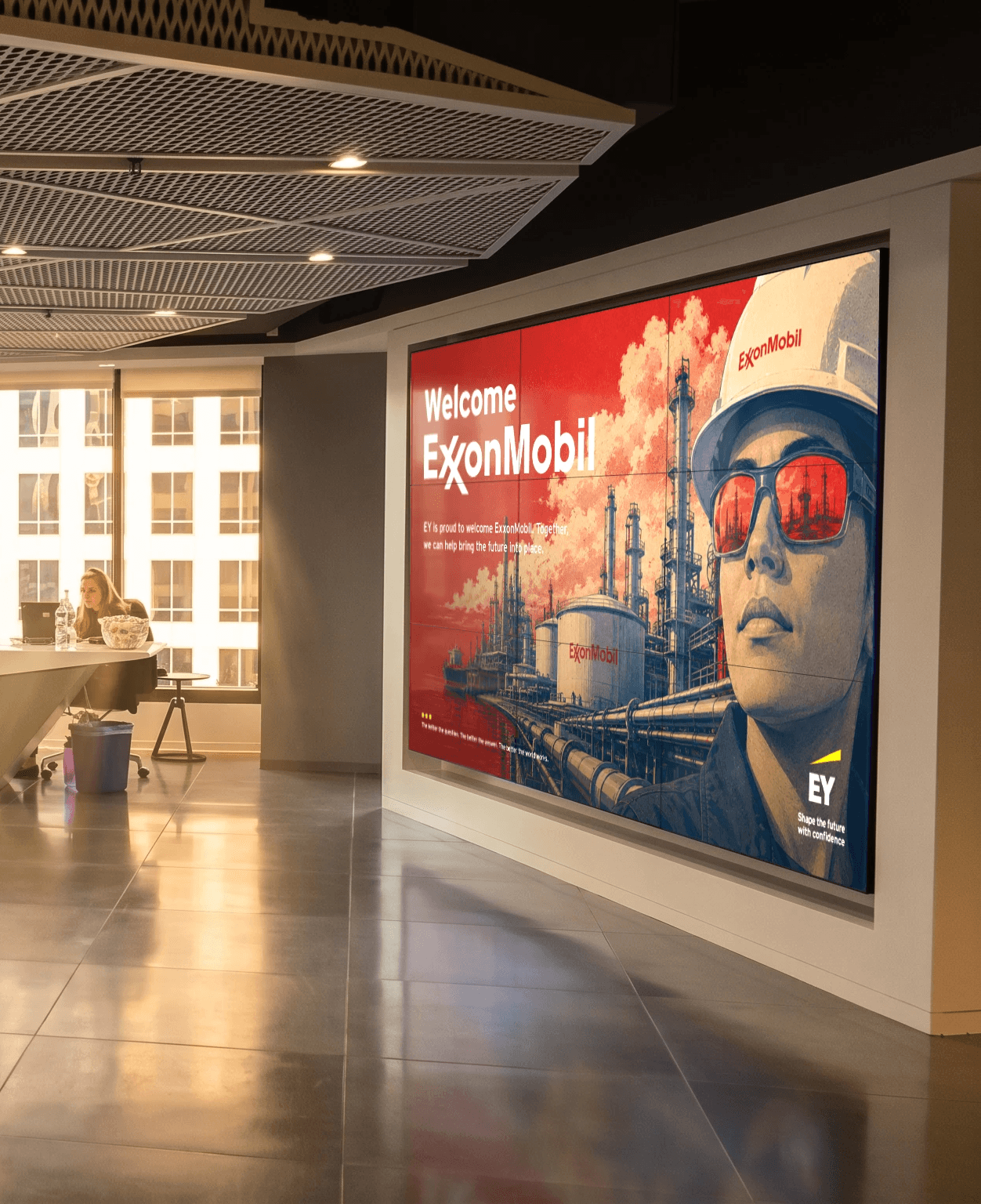
The second stage expanded the pursuit into the world around the meeting. The campaign moved from message to atmosphere, using custom visual direction, digital presence, and environmental media to make the opportunity feel larger than a scheduled conversation. The goal was not to surround ExxonMobil with noise. It was to create a subtle sense that EY had prepared for the relationship with care.
The third stage brought the story into the room. By the time the ExxonMobil team arrived, the message, materials, motion, presentation environment, and table experience needed to feel aligned. The room had to carry the idea before the first slide appeared.
The final stage extended the relationship after the formal meeting. The pursuit did not end when the presentation ended. It continued through follow-up, continued visibility, and the sales team’s relationship-building work.
The result was a campaign that behaved less like a set of deliverables and more like a sequence of signals. Each stage had its own purpose, but all of them pointed to the same idea: EY as the piece that could help bring the larger system into place.

The Outcome
The pursuit helped EY win work inside a major global enterprise account and gain ground against an incumbent Big Four consulting relationship.
The approximate $200M annual opportunity gave the project scale, but the deeper value was strategic. EY strengthened its credibility with ExxonMobil, expanded its position in a high-value account, and showed how Creative Services could shape the perception, confidence, and momentum of a major pursuit.
At this level, design is not decoration around a decision. It is one of the ways confidence is built.